
There are many ways we introduce students to an artist’s work: reading artist biographies aloud, looking closely at images of their artwork, handling original pieces when possible, and demonstrating the techniques and processes artists use.
But one of the most meaningful ways we connect students with art is through conversation. Our group discussions are lively, thoughtful, and sometimes surprisingly powerful. Students share observations, ask questions, make connections, and listen to one another’s ideas. In these moments, art becomes more than something to look at or make—it becomes a way for students to connect with artists, cultures, ideas, and each other.
There’s more to art at Gillispie than meets the eye. Behind each piece our students create are conversations, questions, and connections that help them see the world—and one another—in new ways.
Over the past few weeks, students have discovered new artists, cultures, and creative processes—and then used those inspirations to create artwork of their own. Here’s what each grade has been up to:
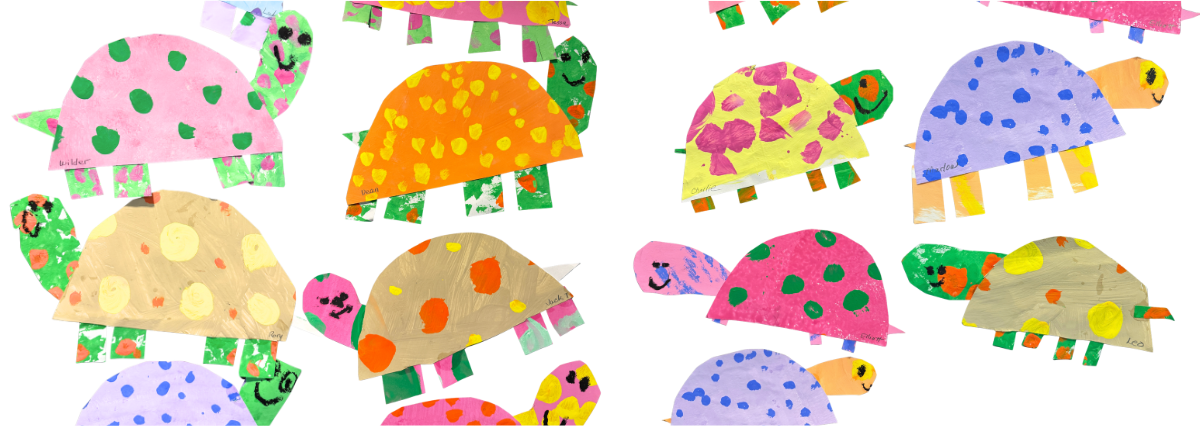
Kindergarten traveled to Oaxaca to learn about artist Josefina Aguilar and her colorful clay figures. Inspired by her process, students sculpted their own soles (suns). They also discovered the world of Yayoi Kusama, “The Princess of Polka Dots.” After painting papers with colorful tempera dots, they cut and assembled shapes to create one of their favorite subjects—Minnie, our resident tortoise! See our banner!
First grade explored the luminous paintings of Claude Monet, focusing especially on his monumental water lily paintings of Giverny. Using oil pastels and watercolors, students created their own lily ponds, experimenting with color, watercolor techniques, and expressive mark-making.
Second grade took inspiration from two important Mexican artists: printmaker José Guadalupe Posada and papier-mâché artist Pedro Linares. Students created calavera prints inspired by Posada’s iconic skeleton imagery and sculpted colorful ceramic alebrijes, drawing on Linares’s fantastical creatures and the rich traditions of Mexican folk art.
Third grade stepped into the colorful world of Frida Kahlo, learning about her home, Casa Azul, and the many beloved animals she often included in her self-portraits. Students then created portraits of themselves with their own animalitos, bringing their personalities and imaginations to life alongside their favorite creatures.